
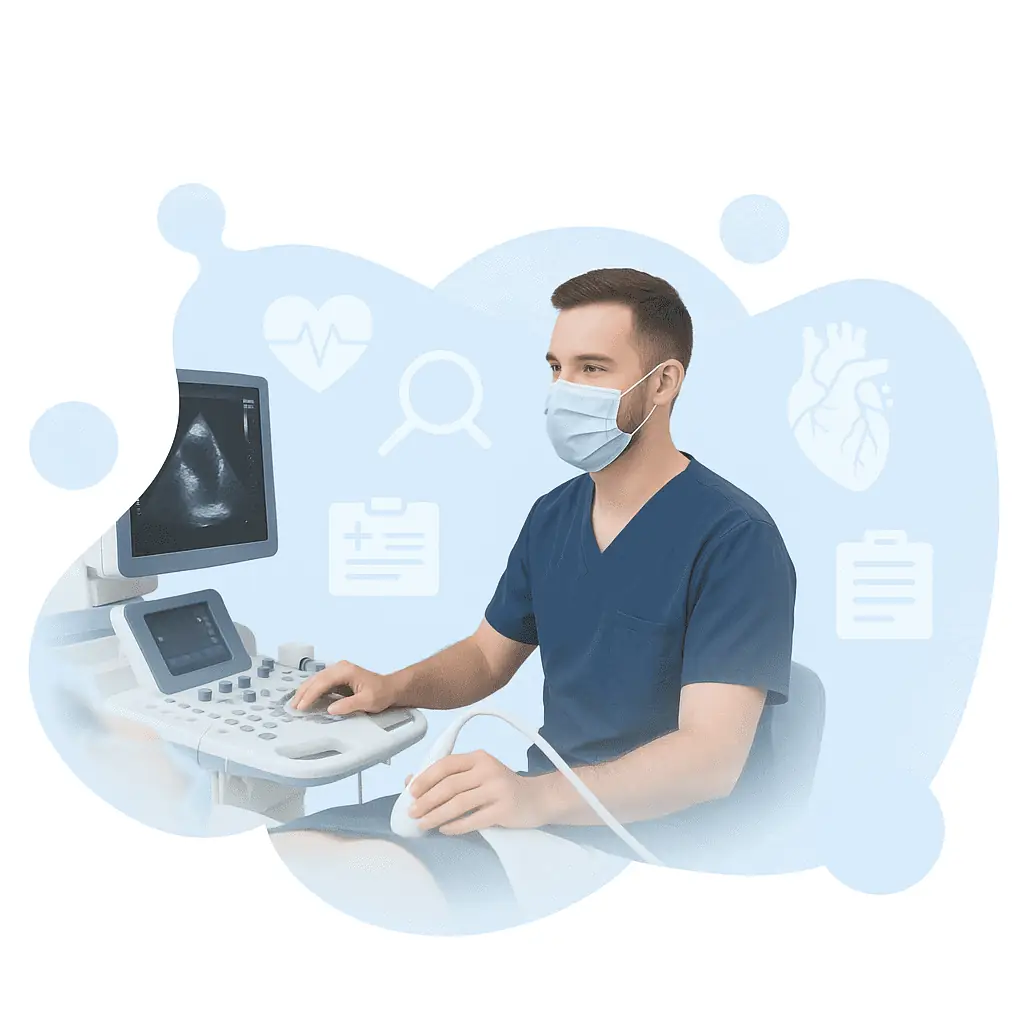
Heart disease continues to be the leading cause of death globally, driving an urgent need for highly trained professionals in cardiac diagnostics. Among the most crucial roles in cardiovascular care is that of an Echocardiography Technician, also known as a cardiac sonographer. Earning the Certified Echocardiography Technician (CET) credential demonstrates that a professional has the knowledge, technical skills, and ethical foundation required to perform echocardiograms—noninvasive diagnostic tests that provide vital insight into heart structure and function.
This certification is designed for individuals who work in hospitals, diagnostic imaging centers, cardiology practices, or outpatient clinics. It affirms competency in using ultrasound equipment to generate images of the heart, assessing blood flow, valve function, and other cardiac indicators. CETs play a critical role in early diagnosis and management of heart conditions, supporting cardiologists in delivering effective patient care.
Free CET Practice Test Online
Key Takeaways
The Certified Echocardiography Technician (CET) credential validates professional skills in cardiac ultrasound imaging.
CETs assist in diagnosing heart conditions by performing echocardiograms and interpreting preliminary findings.
Eligibility typically includes completion of an accredited echocardiography or cardiovascular sonography program.
Certification enhances job prospects in hospitals, cardiac clinics, and mobile diagnostic units.
CETs work closely with cardiologists to ensure accurate and timely cardiac assessments.
Recertification involves continuing education to maintain technical proficiency and regulatory compliance.
Certification may be offered by credentialing bodies such as CCI, ARDMS, or NCCT, depending on specialization and region.
What Is a Certified Echocardiography Technician (CET)?
A Certified Echocardiography Technician is a trained medical imaging professional who specializes in the use of ultrasound technology to evaluate heart function. Echocardiograms are performed to assess structural abnormalities, blood flow issues, valve disorders, and more.
The CET certification validates that a technician:
Can operate ultrasound machines with precision
Understands cardiac anatomy and physiology
Follows standard imaging protocols
Complies with patient care, safety, and ethical standards
Accurately documents findings for physician interpretation
Certification ensures that patients receive safe, competent, and high-quality care while supporting healthcare teams in making timely cardiac decisions.

Eligibility Requirements for CET Certification
While specific requirements vary by certifying organization, general eligibility criteria include:
Completion of an accredited program in echocardiography, cardiovascular technology, or diagnostic medical sonography.
Clinical training with hands-on experience in performing echocardiograms.
High school diploma or equivalent, with a foundation in science and math for entry-level training programs.
Passing of a certification exam through a recognized body such as:
Cardiovascular Credentialing International (CCI) – Offers the RCS (Registered Cardiac Sonographer) credential.
American Registry for Diagnostic Medical Sonography (ARDMS) – Offers the RDCS (Registered Diagnostic Cardiac Sonographer) designation.
National Center for Competency Testing (NCCT) – May offer related cardiac sonography pathways under CET titles in some regions.
Employers typically prefer or require certification for employment, particularly in accredited hospitals and diagnostic labs.
Core Topics Covered in CET Training and Exam
CET preparation includes comprehensive education in both theoretical and practical areas:
Cardiac Anatomy & Physiology
Understanding heart chambers, valves, blood flow patterns, and electrical conduction.Ultrasound Physics and Instrumentation
Applying Doppler techniques, optimizing image quality, and ensuring equipment calibration.Echocardiographic Procedures
Conducting transthoracic echocardiograms (TTE), stress echo, and transesophageal echocardiograms (TEE).Pathology Recognition
Identifying signs of cardiomyopathy, valve disease, congenital defects, and heart failure.Patient Care and Safety
Ensuring comfort, obtaining informed consent, infection control, and emergency response.Medical Ethics and Communication
Maintaining patient confidentiality and communicating with physicians and multidisciplinary teams.
The certification exam usually includes multiple-choice questions based on clinical scenarios, physics principles, and imaging best practices.
Work Environment and Responsibilities
Certified Echocardiography Technicians typically perform the following duties:
Prepare and position patients for echocardiographic procedures
Operate ultrasound machines and capture high-quality cardiac images
Measure ejection fraction, valve function, wall motion, and chamber size
Maintain patient records and transfer findings to interpreting cardiologists
Perform portable exams in intensive care or emergency settings
Support cardiology staff during stress echocardiography or interventional procedures
Technicians often work in hospitals, cardiac clinics, diagnostic laboratories, or outpatient imaging centers. Some may be employed by mobile imaging services or telemedicine-based diagnostic providers.
Benefits of Becoming a Certified Echocardiography Technician
Certification offers substantial benefits for aspiring and current professionals:
Credential Recognition
Demonstrates commitment to excellence and adherence to professional standards.Higher Earning Potential
Certified technicians often command higher salaries due to verified skills and qualifications.Expanded Job Opportunities
Certification is often a hiring requirement for leading hospitals and diagnostic centers.Career Growth
Opportunities to specialize in pediatric echocardiography, fetal echocardiography, or cardiac sonography education.Patient Impact
Directly contribute to improved cardiac care and earlier diagnosis of life-threatening conditions.Professional Networking
Access to continuing education events, associations, and clinical research involvement.

Conclusion
The Certified Echocardiography Technician (CET) credential is a powerful symbol of expertise, accuracy, and dedication in the world of cardiac diagnostics. As cardiovascular disease remains a major health challenge, CETs stand at the forefront of detection and prevention by capturing the heart’s most essential data.
This certification not only builds a rewarding and in-demand career but also contributes directly to the health and well-being of patients. Whether in an emergency department, outpatient clinic, or specialized cardiac unit, certified echocardiography technicians ensure that life-saving information is gathered with precision and care.
For those who are passionate about technology, patient interaction, and cardiovascular science, pursuing CET certification offers a meaningful and impactful path forward in healthcare.
FAQs
Is certification required to work as an echocardiography technician?
While not required in all states, most employers strongly prefer or require certification for employment and advancement.
How long does it take to become CET certified?
Most programs take between 12–24 months, including classroom instruction and clinical practice.
What is the difference between RCS and RDCS?
RCS is awarded by CCI, while RDCS is offered by ARDMS. Both are recognized and respected in the field of cardiac sonography.
Can CETs work in pediatric cardiology?
Yes, with additional training or specialization, technicians can perform echocardiograms on infants and children.
What is the job outlook for CETs?
According to the U.S. Bureau of Labor Statistics, demand for diagnostic medical sonographers, including cardiac technicians, is expected to grow significantly through 2032.